
 Posted by
 Last Saturday, I spoke at a health and wellness event in Hong Kong about the growing role of early cancer detection and preventive healthcare.
Rather than focusing primarily on technology, I chose to share a personal story.
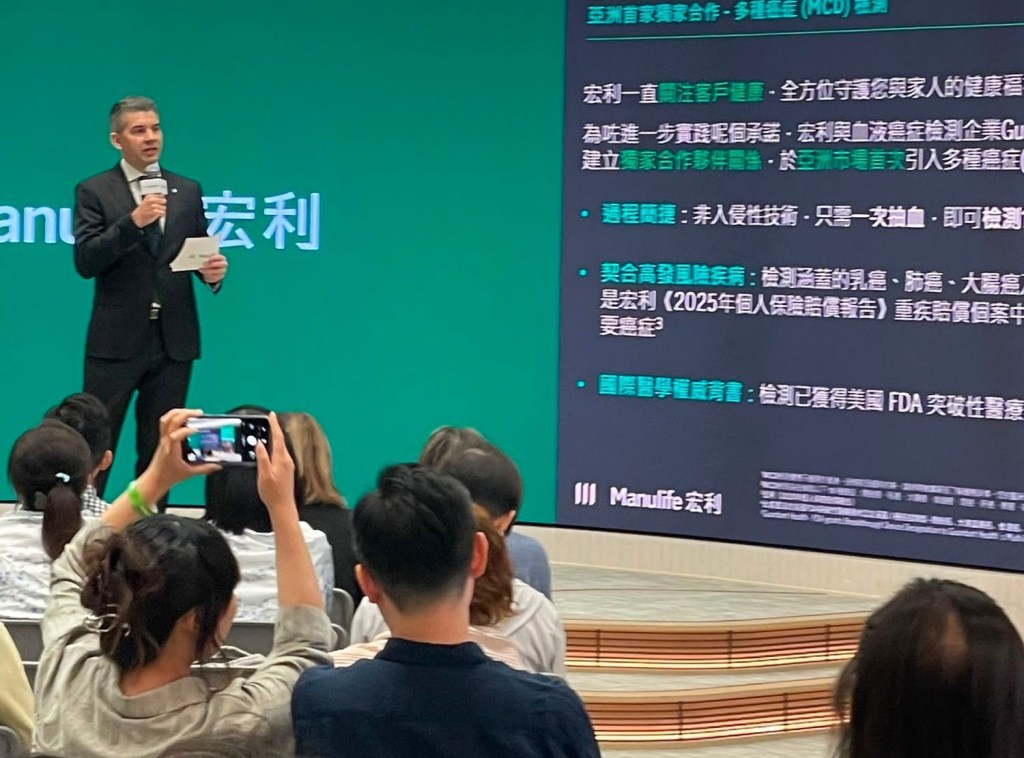
Speaking in Hong Kong about early cancer detection, prevention, and the importance of taking action before it’s too late.
Shortly after my mother turned 59, she started experiencing back pain. Like many people, she didn’t immediately seek medical attention. Life was busy. The symptoms didn’t seem urgent. There was always a reason to wait a little longer.
When she finally went to see a doctor, she was diagnosed with stage 4 lung cancer.
The prognosis was three to six months.
She passed away less than three months later, at the age of 59.
That experience fundamentally changed the way I think about health, prevention, and screening.
Most of us understand, intellectually, that early detection matters. Yet there are countless reasons to put off getting checked. We don’t have time. We don’t want to deal with the inconvenience. Sometimes, if we’re honest, we’re afraid of what we might discover.
But regret has a way of changing your perspective.
If you’ve ever experienced the loss of a loved one and found yourself wondering whether an earlier diagnosis could have made a difference, you become much less willing to postpone the things that matter.
That was the central message I shared with the audience.
Today, advances in medical science are making it easier than ever for people to be proactive about their health. Many screening options are simpler, faster, and less invasive than people assume. The barriers are often no longer technological. More often, they are the reasons we tell ourselves to wait until tomorrow.
What struck me most during the event was how many people connected with this message. Nearly everyone has been touched by cancer in some way, whether through a family member, a friend, or a colleague.
The conversation was a reminder that healthcare is ultimately personal. Behind every statistic is a family. Behind every diagnosis is a story.
If there is one lesson I took from my mother’s experience, it is this:
Don’t wait.
Don’t wait for the perfect moment.
Don’t wait until life becomes less busy.
Don’t wait until symptoms become impossible to ignore.
When it comes to your health, taking action today is usually easier than wishing you had acted sooner.

